
上门女婿
Following Eight Immortals to Penglai, one just needs 48 hours to make all wishes come true_我的网站

一 |
I first watched the movie All Wishes Come True on a sweltering evening in Beijing, the kind of night when the city's heat presses against the windows and the air-conditioning struggles.
The comedy, widely considered one of the best-reviewed Chinese animated features of the 2026 summer season, unspooled its turquoise landscapes and bureaucratic immortals with a lightness that belied the depth of its source material. By the time the credits rolled, I found myself less interested in the characters' KPI struggles than in the place they called home: Penglai - the northern tip of the Shandong Peninsula in East China, where myth and shoreline have shared the same address for more than 1,000 years.
By one Saturday morning, I was on a high-speed train heading east from Beijing, the film still playing in my head. "Don't ask where they came from," the movie's quiet refrain goes, "only where they are going; don't ask about gains or losses, only about right or wrong." It felt like decent travel advice.
Fairyland of the mortal world
Stepping off the train, Penglai announced itself gradually. The air cooled. The sea appeared, first with shimmering light, then as a broad, restless presence. The average temperature here sits at around 12.5 degrees Celsius for the whole year; winters refuse to freeze the spirit, summers decline to scorch it. Locals call the place "the fairyland of the mortal world," and for once the slogan does not feel like municipal overreach.
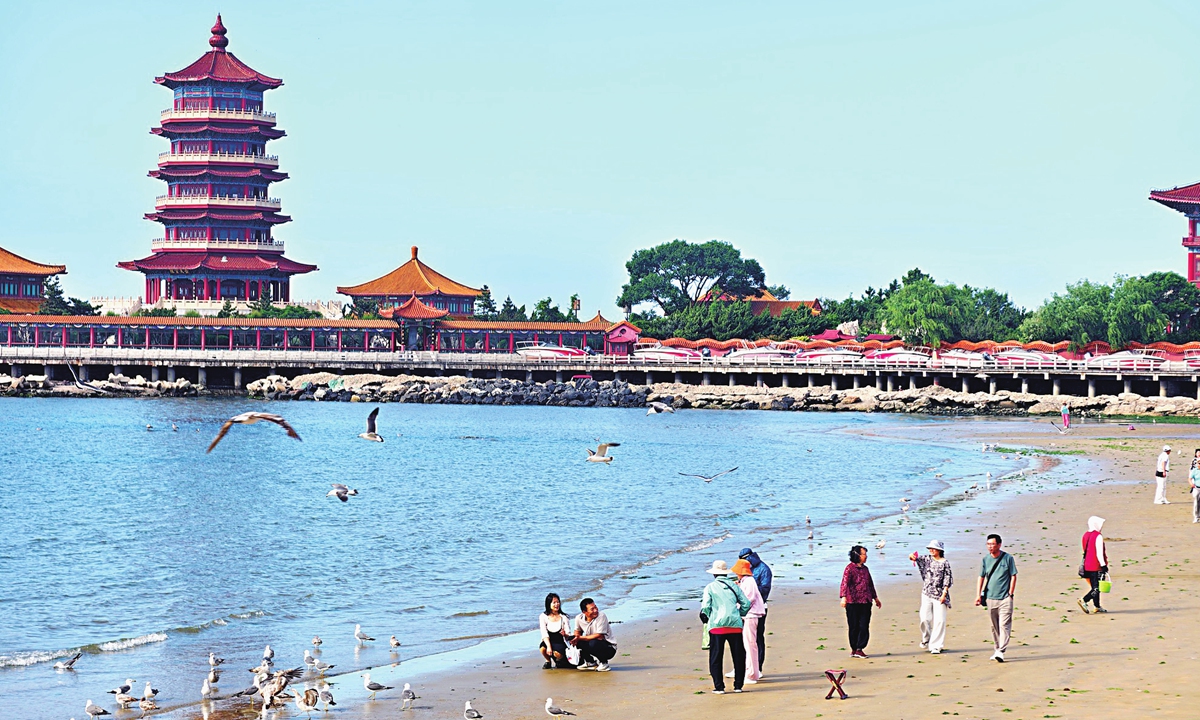
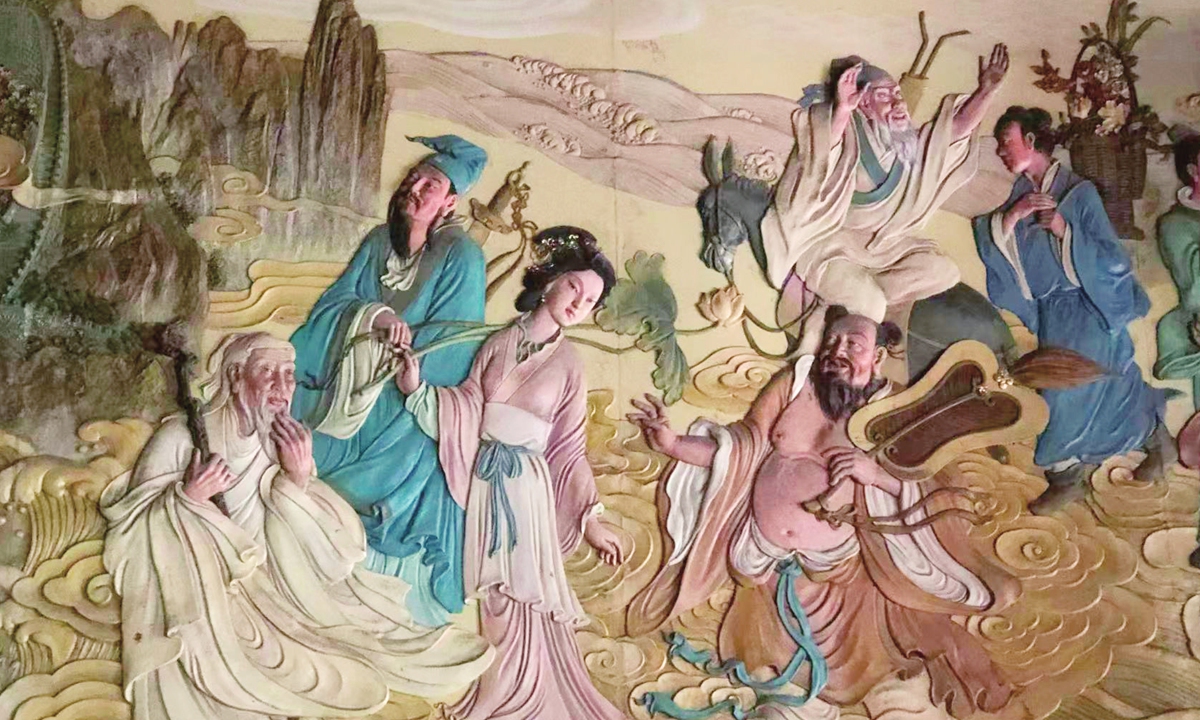
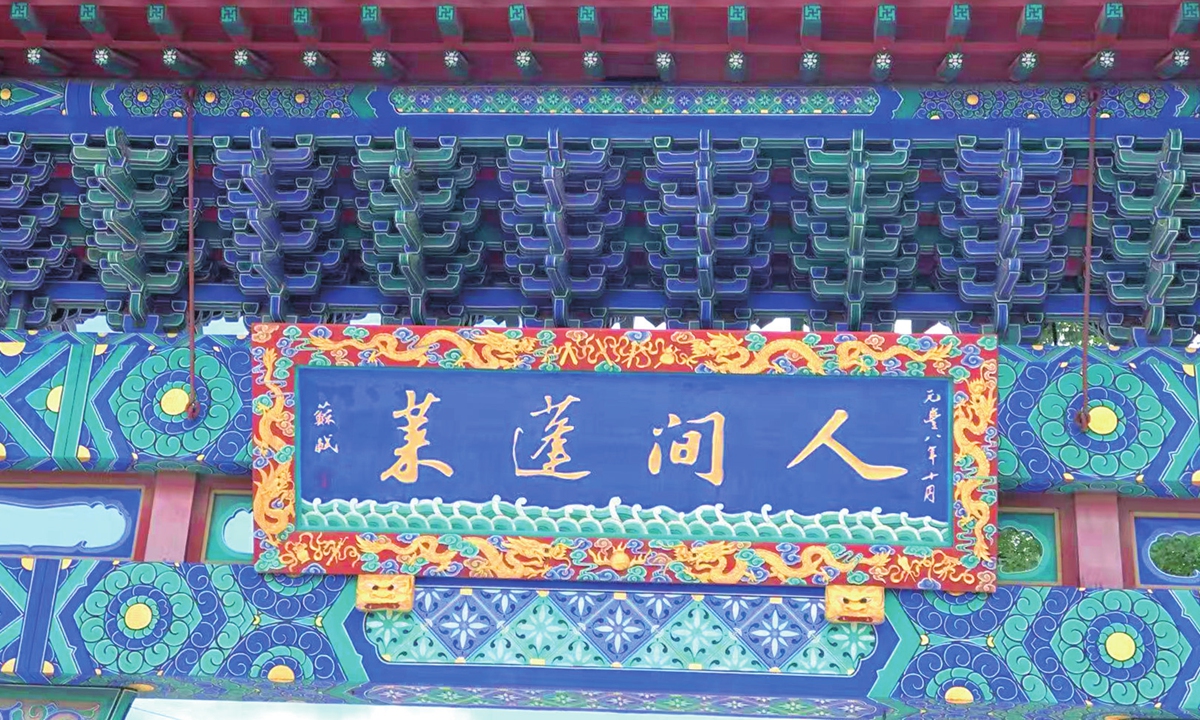
I began, as most pilgrims do, at Penglai Pavilion. The Song-dynasty (960-1279) complex rises from a cliff as if the rock itself had decided to become architecture. It is the only seaside member of China's four great ancient towers, and the only one that smells of salt. From its highest platform the Yellow and Bohai Seas meet in a visible seam of color, two blues arguing politely about territory. Legend insists the Eight Immortals gathered here, drank too well, and then crossed the water by their various supernatural means. Standing in the same spot, I could almost hear the clink of chalices.
The pavilion is not a museum of relics so much as a working stage for memory. The hall of Lü Dongbin, one of the Eight Immortals, still receives incense. Stone tablets carved with poems by generations of visitors lean against one another like old friends. In the afternoons, costumed performers - local "NPCs" of the Eight Immortals - wander the stone paths, joking with tourists, offering blessings, occasionally breaking into song. Children chase a character carrying a flower basket; adults pose solemnly beside Tieguai Li. The boundary between screen and shore softens.
One of the locals, who grew up within sight of the pavilion, told me this was the season for haishi - the mirages that have made Penglai famous for centuries. Sea mirages, sea mists, and horizontal fog form the three maritime wonders here, appearing without schedule and vanishing just as quickly. I waited an hour and alas saw only ordinary clouds. Still, the sense of possibility felt sufficiently satisfying.
Across the water lies the Eight Immortals Cross the Sea scenic area, laid out in the shape of a giant gourd - Tieguai Li's preferred vessel. From the highest pavilion the gardens, pavilions, and sculpted figures form a coherent narrative of ascent and departure. Wandering in the area, you will see that the water is calm, the sky the exact shade of celadon used by the animators. It was easy to understand why story-tellers kept returning to this stretch of coast: the landscape itself seems to invite transformation.
Penglai is not only myth. The old water city, China's best-preserved ancient naval base, still holds the outlines of docks where warships once waited. Nearby stand the memorials to Qi Jiguang, the Ming Dynasty (1368-1644) general who defended these shores against Japanese pirates.
The same peninsula that dreams of immortals also remembers the hard work of keeping the sea lanes open. The film's protagonists, for all their comic incompetence, share a stubborn sense of duty toward the human world. Standing among the fortifications, I felt the two strains of the place - celestial and martial - settle into balance.
Banquet from sea
Food here is another kind of story-telling. At a small restaurant in the city I ordered Penglai noodles, thin and springy, swimming in a broth that tasted of the morning's catch. Later came an "Eight Immortals banquet," each dish inspired by one of the legendary figures: a crisp fish for the crossing, a fragrant wine for the celebration afterward. The wines themselves deserve attention. Penglai sits on the same latitude as some of the world's great vineyards.
In the late afternoon light, the grapes looked almost black, and the air smelled of sea and oak. A glass of local wine, tasted on a terrace overlooking the water, carried a mineral edge that felt like the peninsula distilled.
Evenings belong to the streets. On Xianjie or Immortal Street, lights come on early. Vendors sell souvenirs of the Eight Immortals' magic instruments, small wooden crutches, fans, flower baskets. Musicians play, children run between stalls, and the smell of grilled seafood mixes with the cooler night air. It is ordinary Chinese night-market life, elevated by the knowledge that the stories being sold have been circulating for a millennium.
I spent my last morning climbing Laobeishan or Tianheng Mountain to the precise point where the two seas divide. The water on one side was a deeper yellow, on the other a clearer blue. Tourists took photographs, capturing the magical sight of the water's two different colors.
Penglai is much more than what is portrayed in the movie. The cliffs, the pavilion, the mirages, and the slow accumulation of legend were here long before any animator arrived. Yet the film has done what good popular art sometimes does: it has given a new generation a reason to look again. Walking back down the mountain that morning, I kept thinking of the line about not asking about origins, only about destinations.
Penglai's destiny, it seems, is simply to remain itself - half myth, half working harbor - while the rest of us keep arriving, notebooks open, cameras ready, half expecting to see haishi.
。
[ 资讯] 日前,我们从官方获悉,红旗HS9 PHEV(参数|询价)(内部代号P701)平台样车成功试制下线。
。
二 | 新车此前曾在上海车展上完成首发亮相,其将搭载鸿鹄混动平台,搭载2.0T发动机与双电机组成的插电混动系统,并会配备司南1000智驾系统,预计有望在2025年年内正式推出。

三 | 结合此前消息,新车还会提供双拼色车身以及轮圈造型供选装。
红旗HS9 PHEV动力将会搭载2.0T混动专用发动机与双电机的组合,另外还会配备全主动悬架和线控转向技术等。
四 | 据悉,新车内部有望提供6座或7座布局,并会配备零重力回弹座椅、恒温氧吧系统以及司南1000智驾系统等等。关于新车的更多信息,我们也将持续关注报道。(文/ 郭辰)
Current article:http://1a1q.jiaopeikongbenlo.pics/bq4e/20260826/4473.html
Published on:22:15:48